
 Laserglow Marketing·Apr 22·6 min read
Why OEM Manufacturing Matters in Industrial Safety Projection Systems
What does OEM manufacturing mean in industrial safety projection systems?
OEM stands for original equipment manufacturer. In industrial safety projection systems, it means the company selling the equipment also designs, tests, assembles, and supports it. When a company controls the engineering and assembly process, it can design the system around real operating conditions. Engineers can test light output, lens selection, mounting height, and projection clarity to make sure the image stays visible under warehouse lighting, dust, and constant movement. Laserglow designs, tests, and builds its systems in North America, including its manufacturing facility in Sterling Heights, Michigan. From engineering to assembly, the company maintains direct control over how its systems are developed and deployed. That approach has led to wide adoption across manufacturing and logistics facilities, including:
- 12,000+ system deployments
- Systems still operating after 5+ years on facility floors
These long-running installations point to a practical advantage of OEM manufacturing. When the engineers who design the system also build and support it, real-world performance stays closely tied to the people who understand the technology best. That level of accountability becomes especially important when safety systems must meet regulatory and operational demands.
Why does OEM control improve reliability, compliance, and support?
When a company designs and manufactures its own safety systems, it takes full responsibility for how those systems perform in the field. That responsibility includes engineering quality, product testing, documentation, and long-term support. For facilities that rely on projection systems in active forklift and pedestrian areas, that level of control can make a meaningful difference in reliability, serviceability, and long-term performance.
Why this matters on the facility floor
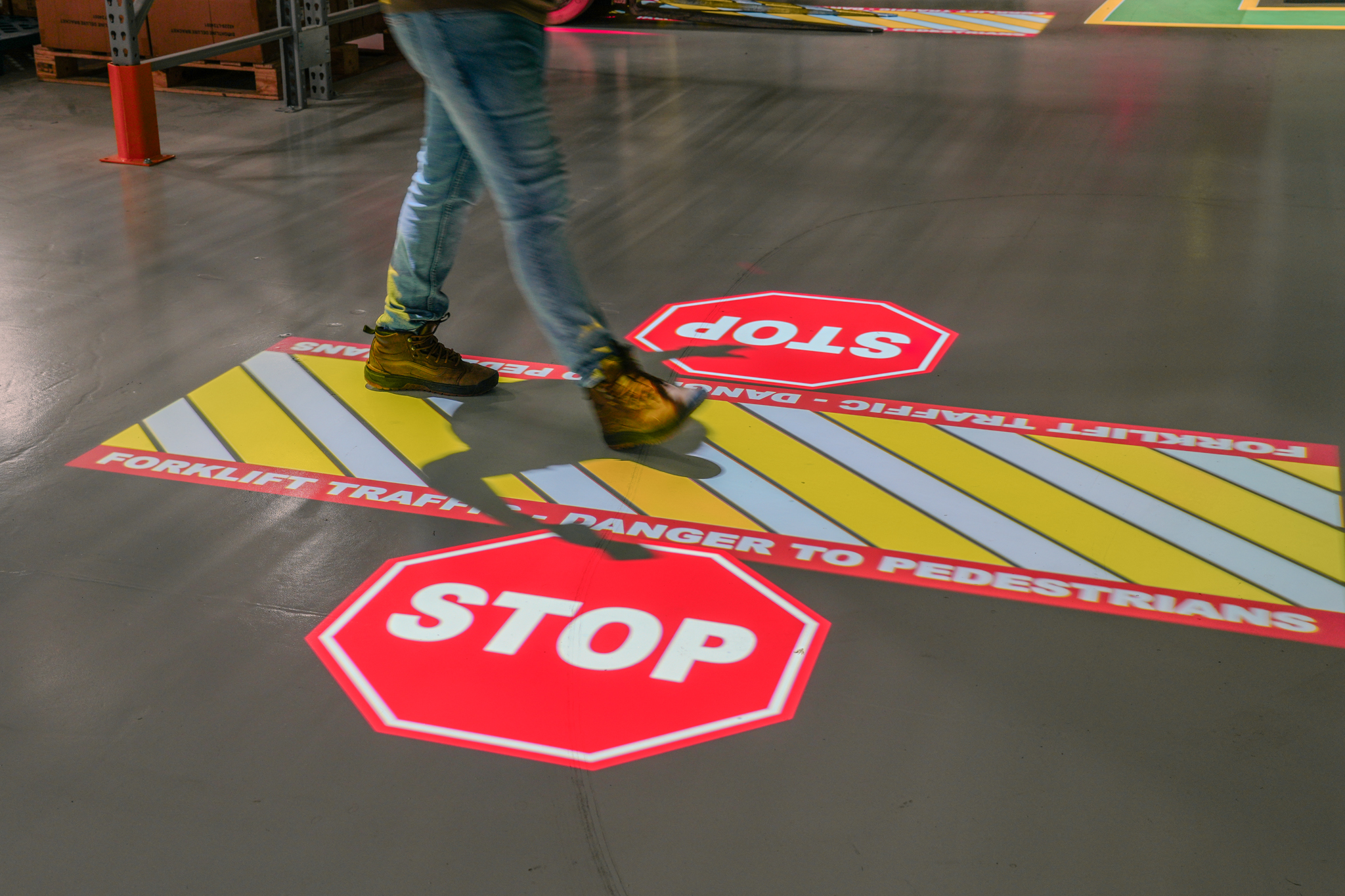
Those responsibilities matter most where the system is actually used. Safety projection systems are often installed in areas where forklifts and pedestrians share space, so visibility and reliability affect real workplace risk. U.S. workplace safety rules already require employers to manage those environments . OSHA 29 CFR 1910.176(a) states that permanent aisles and passageways must be appropriately marked. Forklift safety requirements under 29 CFR 1910.178 also require employers to address pedestrian traffic and restricted areas during operator training. Projection systems can support those controls by reinforcing visual boundaries and warning zones in busy industrial environments. That is why the manufacturer behind the system matters. For a safety marking system to stay dependable in active forklift and pedestrian areas, the equipment has to be engineered, tested, and supported with the application in mind.
Engineering ownership improves support
Engineering ownership also shapes what happens after installation. When the manufacturer builds the system internally, the engineering team understands the product at the component level. That knowledge allows the system to be adjusted when facility conditions change:
- Adjusting projection brightness for strong overhead lighting
- Changing lens configurations for different mounting heights
- Modifying projection layouts for new traffic patterns
- Adapting warning zones near dock doors or intersections
Direct access to design history, testing data, and engineering documentation can be valuable when systems need to be adjusted, expanded, or serviced. For safety leaders managing busy facilities, that level of support can make a meaningful difference over the life of the system. In environments where equipment and people move constantly, reliable safety technology depends on more than the projected image. It depends on the engineering responsibility behind the system.
How does North American production help US and Canadian facilities?
North American production improves reliability in ways that go beyond shipping speed. When safety equipment is assembled and supported closer to the facilities using it, organizations often see faster delivery, clearer communication, and more predictable service. Long global supply chains can introduce delays, changing costs, and limited access to technical support. Federal agencies have been raising this issue for several years. The U.S. Department of Commerce, in its FY 2025 Budget in Brief , notes that strengthening resilient supply chains supports economic prosperity and national security. These findings do not suggest every imported system will cause problems. They do show a practical benefit. When safety systems are produced and supported within North America, facilities often gain:
- Shorter and more predictable lead times
- Faster access to engineering and technical support
- Reduced exposure to shipping delays and tariff uncertainty
Laserglow supports this approach through its facilities in Michigan and Canada, where systems are assembled and serviced closer to the markets they serve. For U.S. and Canadian facilities managing tight installation timelines or urgent safety upgrades, regional production helps move projects from planning to deployment more quickly. Regional manufacturing also creates another advantage. When engineering and production remain closely connected, systems can be designed around the specific layout and operating conditions of each facility.
What does site-specific customization look like in practice?
Site-specific customization means the system is designed around the facility, not forced onto it. That’s where the advantages of OEM manufacturing become most apparent. Facilities often require different visual controls depending on their layout and operations:
- Projected pedestrian walkways at cross aisles where forklifts and workers intersect
- Forklift exclusion zones near loading docks or high-traffic equipment routes
- Traffic guidance in washdown environments where painted markings quickly degrade
- Warning lanes around battery charging stations in distribution centers
- Custom floor symbols that reinforce pedestrian separation at blind corners
Laserglow systems can be configured for mounting height, lens selection, projection templates, and layout design. These adjustments reflect the realities of industrial environments, where shadows, glare, changing traffic patterns, and evolving floor layouts affect how safety systems perform. Customization ensures the system fits the environment. The next question is how a manufacturer applies that capability in real facilities and supports those systems over time.
How does Laserglow help facilities solve these problems?
Laserglow Technologies engineers and manufactures industrial safety projection and detection systems used in high-traffic facilities around the world. As an OEM manufacturer, the company designs, builds, and supports its systems in North America, ensuring each deployment is engineered for real industrial environments, not adapted from generic hardware. Instead of relying on static markings or temporary controls, Laserglow systems create durable visual guidance designed for visibility, reliability, and site-specific hazard management. Facilities work with Laserglow to:
- Separate forklifts and pedestrians: Create clear traffic boundaries using high-visibility projected walkways, safety zones, and directional paths.
- Maintain visibility in high-wear areas: Replace paint and tape that fade, chip, or disappear under constant forklift traffic.
- Design systems around real facility conditions: Configure projections based on lighting, mounting height, traffic flow, and operational constraints.
- Reinforce safety procedures visually: Deploy customized projection templates and warning symbols that match site-specific safety protocols.
- Access direct engineering expertise: Work with the same team that designs and builds the equipment for faster troubleshooting and system adjustments.
- Deploy proven industrial systems: Install technology already operating in thousands of manufacturing, logistics, and industrial facilities.
If your facility is evaluating forklift traffic zones, pedestrian separation, or alternatives to paint and tape in high-wear areas, it’s time to review how those hazards are currently controlled. Explore Laserglow’s safety projection systems or request a site-specific consultation to review your highest-risk zones with the engineers who design and manufacture the technology.
FAQ
What is an OEM safety projection system?
An OEM safety projection system is designed, engineered, and assembled by the same company that sells and supports it. This direct control improves reliability, customization, and service because the manufacturer understands the system’s optics, electronics, and installation requirements.
Why are projected safety markings used in warehouses and industrial facilities?
Projected markings usually work alongside painted lines rather than replacing them completely. Facilities often use projection systems in high-traffic areas where paint fades quickly, where layouts change often, or where stronger visual cues help workers notice hazards sooner.
How do safety projection systems support OSHA forklift and traffic safety requirements?
Safety projection systems can help facilities reinforce traffic routes and shared-space awareness where forklifts and pedestrians operate. OSHA requires employers to maintain marked aisles and safe travel paths under 29 CFR 1910.176 and address pedestrian traffic risks in forklift operations under 29 CFR 1910.178.
Why do some facilities choose projection systems instead of paint or floor tape?
Paint and tape can fade, peel, or become hard to see in high-traffic areas. Projection systems create bright visual markings that remain visible without physical wear, which helps facilities maintain consistent traffic guidance in busy environments.
How do industrial safety projection systems adapt to different facility layouts?
Industrial projection systems can be configured with different lenses, mounting heights, projection templates, and brightness levels to match the environment. This allows facilities to create custom walkways, warning zones, and traffic paths that align with real traffic patterns and operational needs.
Recent Posts
See AllPilot Paralysis: When a Smart Safety Pilot Quietly Becomes the Final PlanIf Your Safety System Looks the Same as Last Year, It’s Already OutdatedHow Smart Sensors Will Become the New Normal