
 Laserglow Marketing·Mar 20·6 min read
Field-Tested, Not Experimental: The Proven Reliability of Laserglow Projection Systems
Is safety projection technology still experimental?
Safety projection technology isn’t an untested concept. The real question is whether a system was engineered for industrial conditions and proven during daily operations, not just during controlled demonstrations. That distinction matters because industrial environments are unpredictable. A system that looks effective during installation must still perform around dust, glare, forklift traffic, changing lighting conditions, and constant movement before safety leaders trust it on the shop floor. This risk becomes clearer when you look at data from the National Safety Council on incidents involving forklifts:
- 84 workers died in forklift-related incidents in 2024
- 25,110 forklift-related DART injury cases occurred in 2023–2024
In facilities where forklifts, pedestrians, and equipment move through the same areas, visibility and hazard awareness must hold up throughout the workday, not just during a product demonstration. Understanding the real-world risks these systems address helps clarify why reliability matters so much. That leads to a more practical question about what actually makes a projection system trustworthy in daily operations.
What makes a projection safety system proven instead of risky?
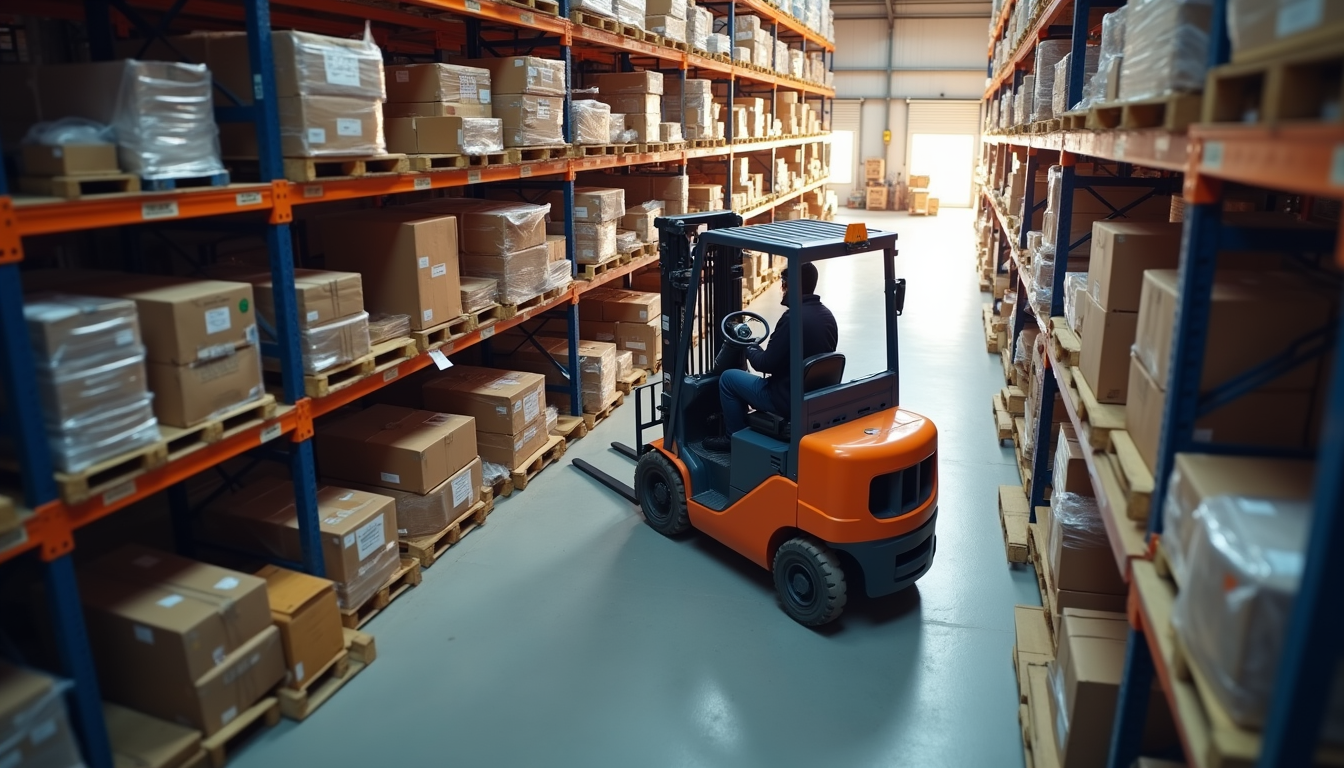
A projection safety system proves its value during everyday operations, not just in product descriptions or demonstrations. The real test happens on the shop floor, where people, vehicles, and equipment move through the same space all day. That environment introduces constant variables. A projection system must remain visible and dependable around conditions such as:
- Forklift traffic moving through shared aisles
- Pedestrian movement in active work zones
- Overhead lighting and glare from industrial fixtures
- Dust and airborne particles common in production areas
- Rack aisles and tight warehouse pathways
- Loading docks with constant vehicle activity
- The many distractions that naturally occur during a shift
Operational support also matters. When conditions change, safety teams need equipment backed by engineering expertise so adjustments, maintenance, and upgrades don’t turn into guesswork. Laserglow’s systems follow this model. We design and manufacture our technology as OEM-built, patented, and field tested, with thousands of deployments and installations operating in facilities for more than five years. New safety tools often feel experimental, but systems that have already been running successfully in real facilities begin to earn a different kind of trust. But even when technology appears capable, trust does not come easily in safety-critical environments.
Why do safety leaders hesitate to trust new visual safety tools?
Safety leaders are responsible for systems that must work every shift, not just during installation. When a new safety tool is introduced, it becomes part of an environment where forklifts, pedestrians, and equipment already move through carefully managed traffic patterns. If that tool creates confusion, slows operations, or fails during a busy shift, the consequences are immediate. For that reason, safety professionals tend to evaluate new technologies carefully before integrating them into established safety programs. Regulatory expectations reinforce that cautious approach. The Occupational Safety and Health Administration (OSHA) does not specifically require projection systems, but it does require employers to manage risks associated with powered industrial trucks and pedestrian movement. Key OSHA requirements include:
- Under
- , forklift operators must maintain a clear view of travel, slow down where vision is obstructed, and operate at speeds that allow a safe stop.
- Under
- , facilities must maintain safe clearances and clearly mark permanent aisles and passageways.
Because of these responsibilities, safety leaders rarely adopt new tools based on features alone. They look for systems that strengthen existing traffic controls, improve hazard awareness, and integrate smoothly with training, procedures, and operational workflows. This caution does not mean safety leaders reject innovation. Instead, they look for credible evidence that visual warning systems have already been studied and evaluated in real workplaces.
What does research say about visual warning systems in industrial settings?
Several studies and safety investigations highlight how visual warning cues improve awareness around mobile equipment:
- A
- tested blue and red retrofit lights on three forklifts over four months. All nine employees interviewed said the lights improved visibility and safety, though the researchers noted more studies are needed to measure long-term injury reduction.
- A
NIOSH Fatality Assessment and Control Evaluation (FACE) report
- identified warning lights and spotlights as tools that can alert pedestrians when forklifts approach.
- A
Journal of Safety Research paper hosted by NIOSH
- reported that visual warning systems can improve how quickly pedestrians detect mobile equipment. Earlier research cited in the paper found detection speed improved by about 75%.
These findings don’t suggest that every warning system performs the same way. What they do show is that visual warning cues have already been tested in real workplaces where workers and equipment operate close to each other. Research can demonstrate potential, but operational history ultimately determines whether a system earns long-term trust. That is where field testing becomes especially important.
How does field testing build trust that specs alone cannot?
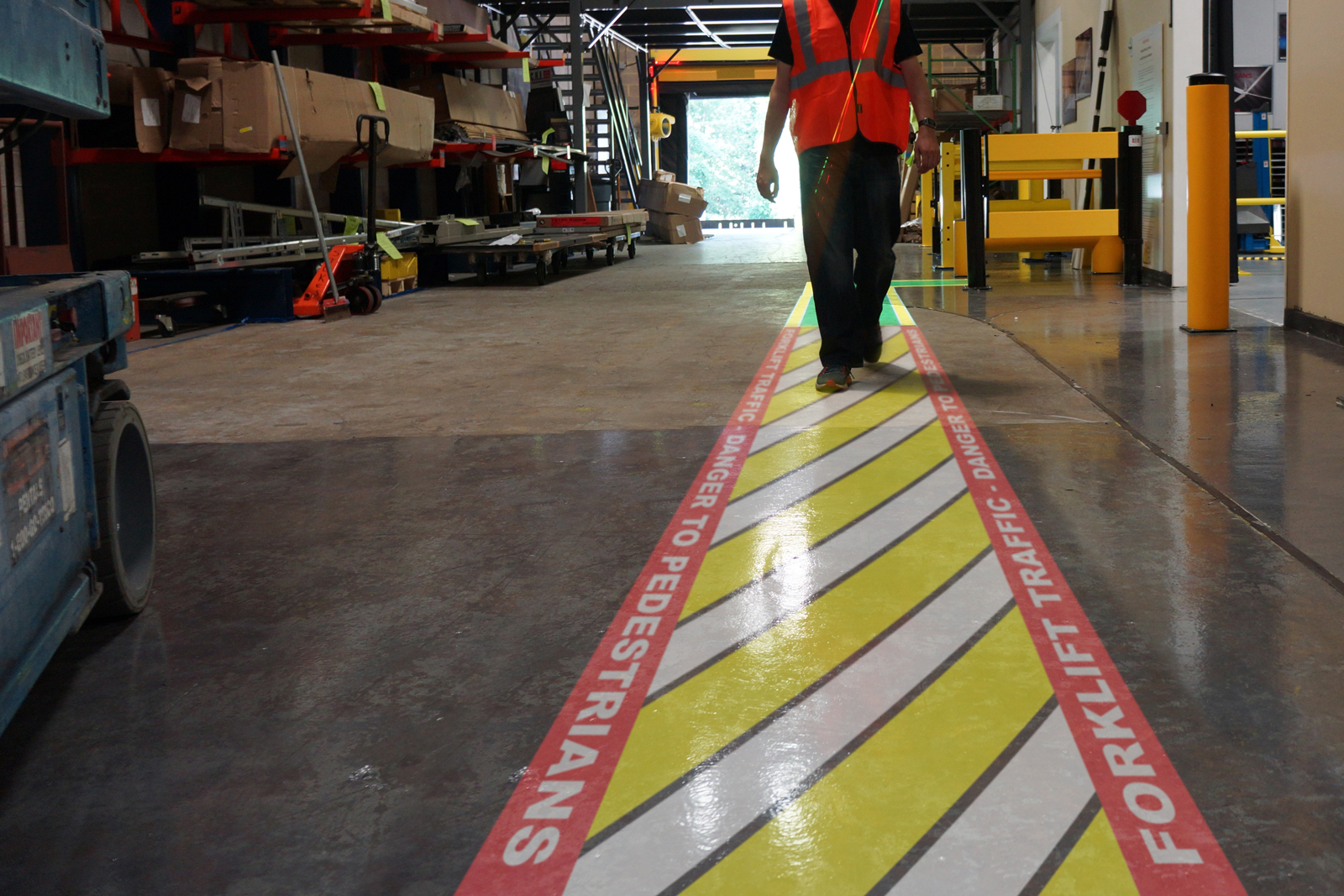
Field testing builds trust because safety systems prove their value through consistent performance over time. Specifications and product sheets may describe what a system should do, but real confidence comes from seeing how it performs during everyday operations. A projected walkway may look crisp during installation, but the real test begins after the system becomes part of the normal workflow. It must remain clear and useful during second shift traffic, during busy dock schedules, and after months of forklift movement when workers no longer treat the projection as something new. Operational history is the clearest indicator that a safety system works. At Laserglow, our projection systems have been deployed in thousands of facilities and continue to operate in active environments year after year:
- More than 12,000 deployments of its safety projection systems
- Installations operating for more than five years in active facilities
This long-term performance shows how the systems hold up under real traffic, lighting conditions, and daily operational demands. The next step is understanding how those principles translate into solutions used in active facilities.
How Laserglow Helps Facilities Turn Safety Strategy Into Daily Practice
Laserglow Technologies designs and manufactures industrial safety systems that make hazards harder to ignore. Instead of relying only on paint, signs, or worker memory, our projection and detection systems place clear visual warnings directly where risk appears. In fast-moving environments where forklifts, pedestrians, and equipment share space, visibility often determines whether a near miss becomes an incident. Laserglow systems help facilities reinforce awareness at the exact points where attention matters most. Facilities use Laserglow systems to strengthen safety visibility in the areas where risk tends to concentrate:
- Define high-risk zones clearly: Project clear safety zones around forklifts, dock doors, intersections, and pedestrian crossings so workers immediately recognize danger areas.
- Replace markings that fade: Use bright projected walkways, lines, and warning symbols that remain visible even in high-traffic industrial environments.
- Improve awareness at blind spots: Add visual cues at blind corners and intersections so workers can detect approaching equipment sooner.
- Design around real operations: Configure projection layouts to match actual facility traffic patterns, workflows, and equipment movement.
- Reinforce safe traffic flow: Support stronger traffic management by clearly marking routes, aisles, and separation between pedestrians and vehicles.
If your facility relies on static paint or tape to control high-traffic zones, it may be time to evaluate how those controls actually perform during a normal shift. Schedule a meeting with Laserglow to review your highest-risk areas and see how field-tested projection systems can strengthen visibility, awareness, and safety across your facility.
FAQ
What are laser safety projection systems used for in industrial facilities?
Laser safety projection systems create bright visual warnings on floors, walls, or equipment paths to highlight hazards, pedestrian walkways, forklift zones, and traffic routes. These systems help workers quickly recognize risk areas in warehouses, manufacturing plants, and loading docks where vehicles and people move through shared spaces.
Do projected safety markings replace painted floor lines in warehouses?
Projected markings usually work alongside painted lines rather than replacing them completely. Facilities often use projection systems in high-traffic areas where paint fades quickly, where layouts change often, or where stronger visual cues help workers notice hazards sooner.
Are laser projection safety systems compliant with OSHA standards?
OSHA does not specifically require projection systems, but the technology can support OSHA expectations for marked aisles, safe clearances, and improved visibility in forklift traffic areas under standards like 29 CFR 1910.176 and 29 CFR 1910.178. Projection systems act as an additional visual aid within a broader safety program.
Do visual warning systems actually improve hazard awareness around forklifts?
Research from organizations like NIOSH shows that visual warning aids can improve how quickly workers detect approaching equipment. In one warehouse pilot study using forklift warning lights, workers reported improved visibility and safety, suggesting that strong visual cues help pedestrians notice moving equipment sooner.
Where are projection safety systems most effective in a facility?
Projection systems tend to deliver the most value at conflict points where attention is stretched. Common examples include forklift intersections, pedestrian crossings, dock door zones, blind corners, and high-traffic warehouse aisles where workers and equipment frequently share space.
Recent Posts
See AllPilot Paralysis: When a Smart Safety Pilot Quietly Becomes the Final PlanIf Your Safety System Looks the Same as Last Year, It’s Already OutdatedWhy OEM Manufacturing Matters in Industrial Safety Projection Systems